Biostatistics
Blog
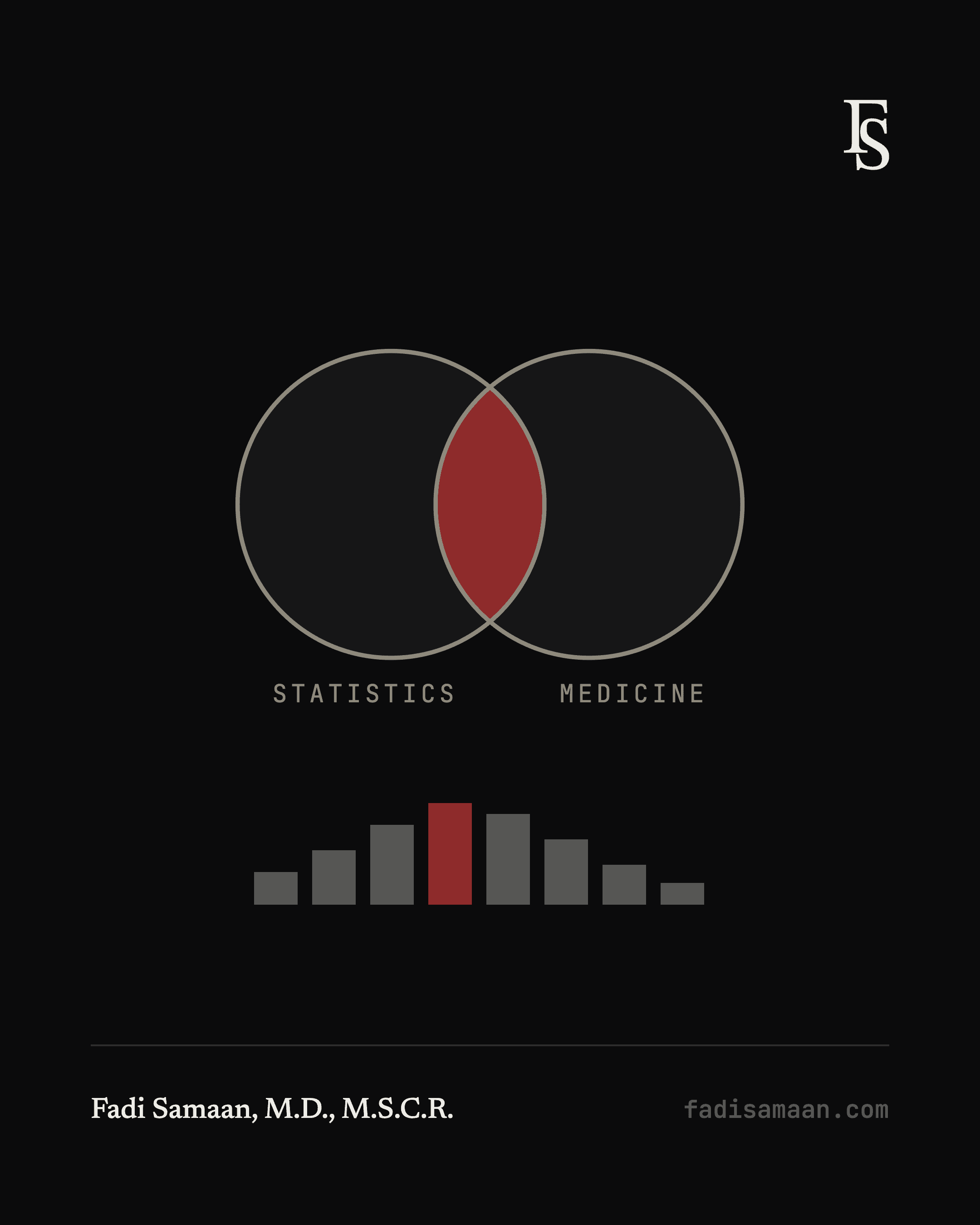
Statistics in Medicine: An Essential Tool
Why Every Doctor Needs to Understand Data

Making Sense of Medical Data
Descriptive vs. Inferential Statistics and Why They Matter

Averages and Spread in Data
Understanding What Medical Data Is Telling You

Understanding the Bell Curve
Why Symmetry Matters in Medical Data

What a P-Value Actually Means
The Most Misunderstood Number in Medical Research

What Does a 95% Confidence Interval Really Mean?
Why a Range Tells You More Than a Single Number

How Many Patients Do You Actually Need?
A Plain-Language Guide to Statistical Power
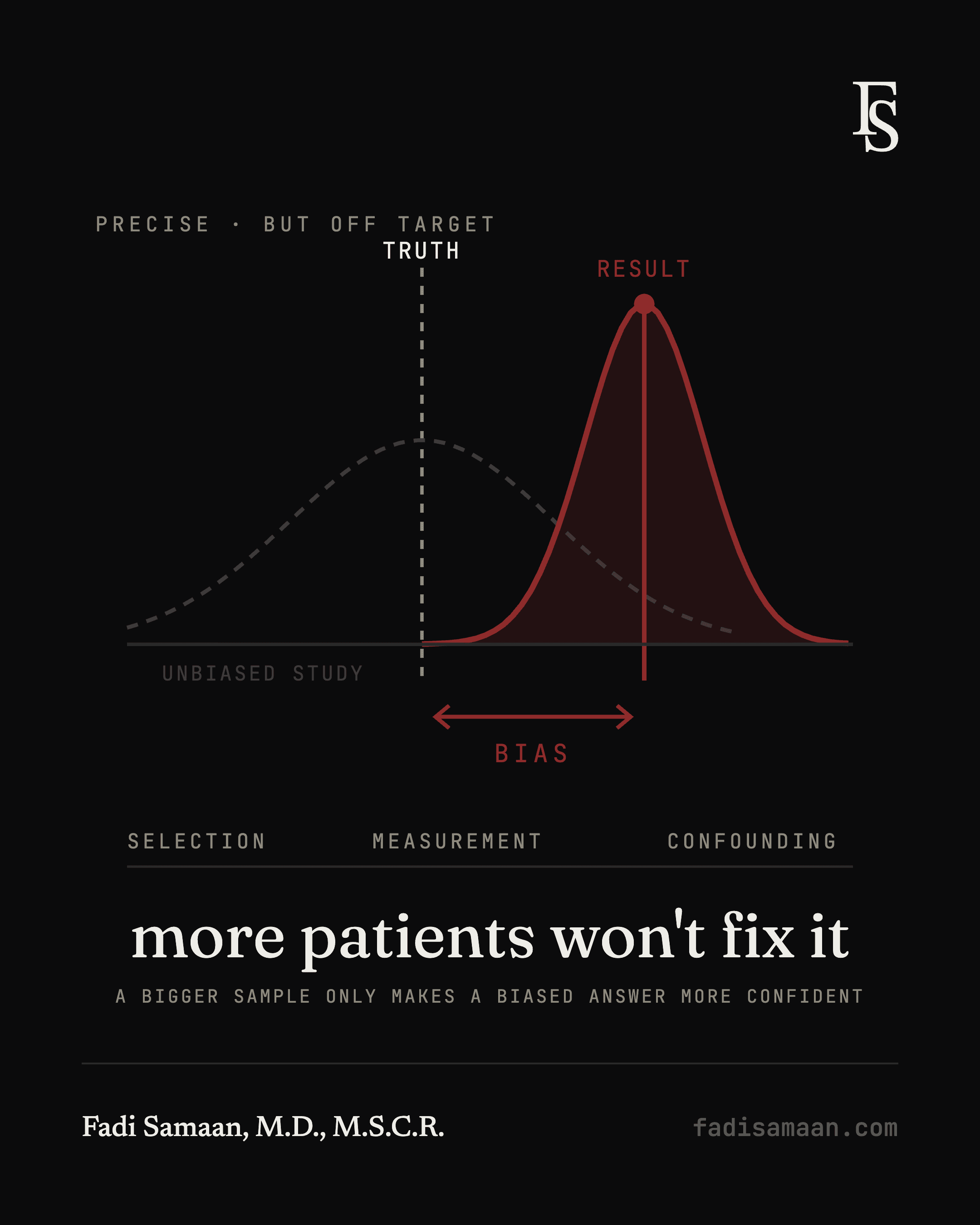
Why a Well-Powered Study Can Still Be Wrong
An Introduction to Bias in Research Design

How Researchers Try to Outsmart Confounding
Randomization, Adjustment, and the Trap of Simpson’s Paradox

Sensitivity and Specificity: The Two Numbers Behind Every Test
Cutoffs, Prevalence, and What a Result Actually Tells You

Reading an ROC Curve
The Curve, AUC, and Their Limits

Likelihood Ratios: What Actually Changes Your Mind
Turning a Result Into an Updated Probability

Relative Risk vs. Odds Ratio
Rare Diseases, Case-Control Studies, and Misleading Headlines
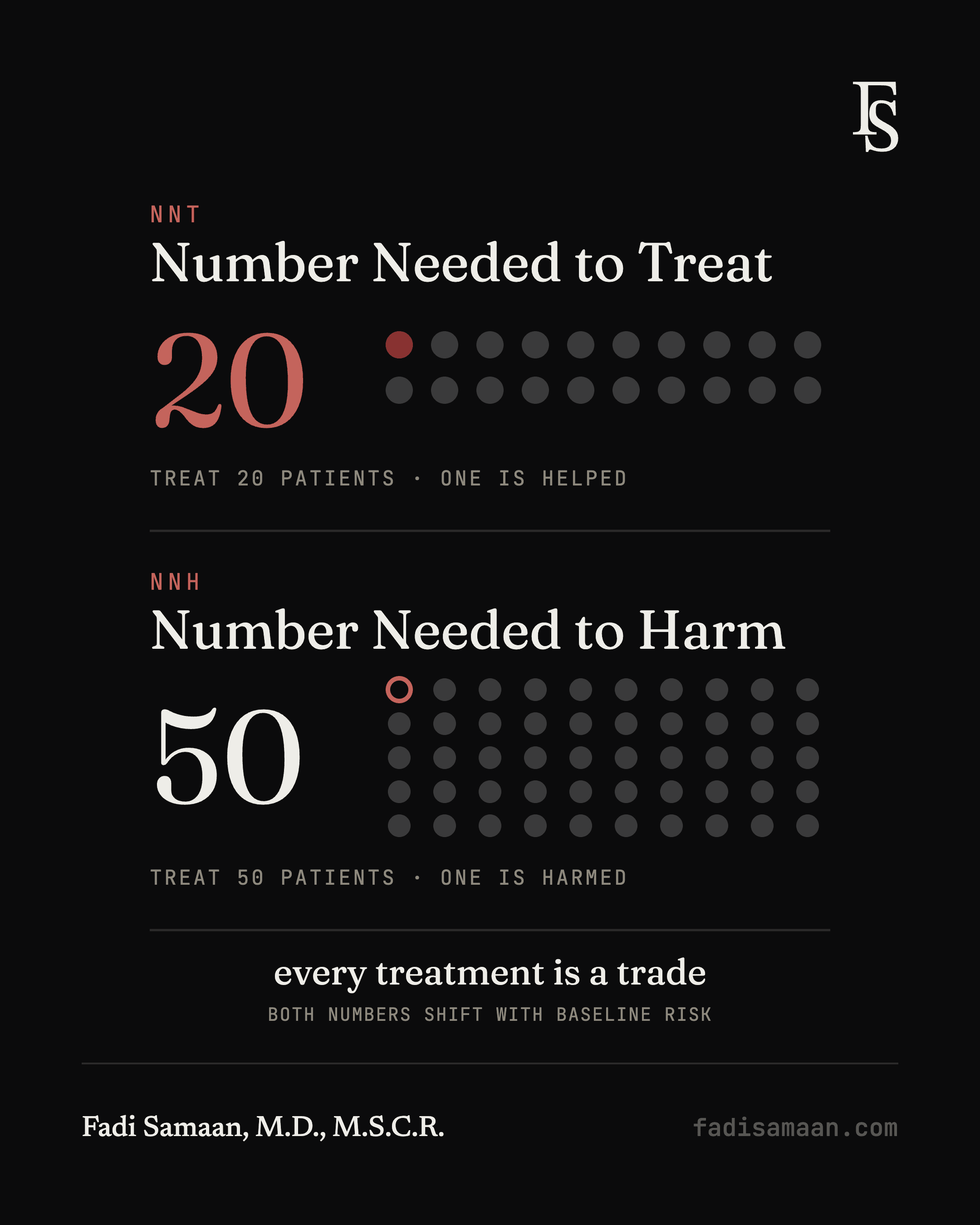
Number Needed to Treat and Number Needed to Harm
Baseline Risk, Outcome Choice, and Benefit Versus Harm
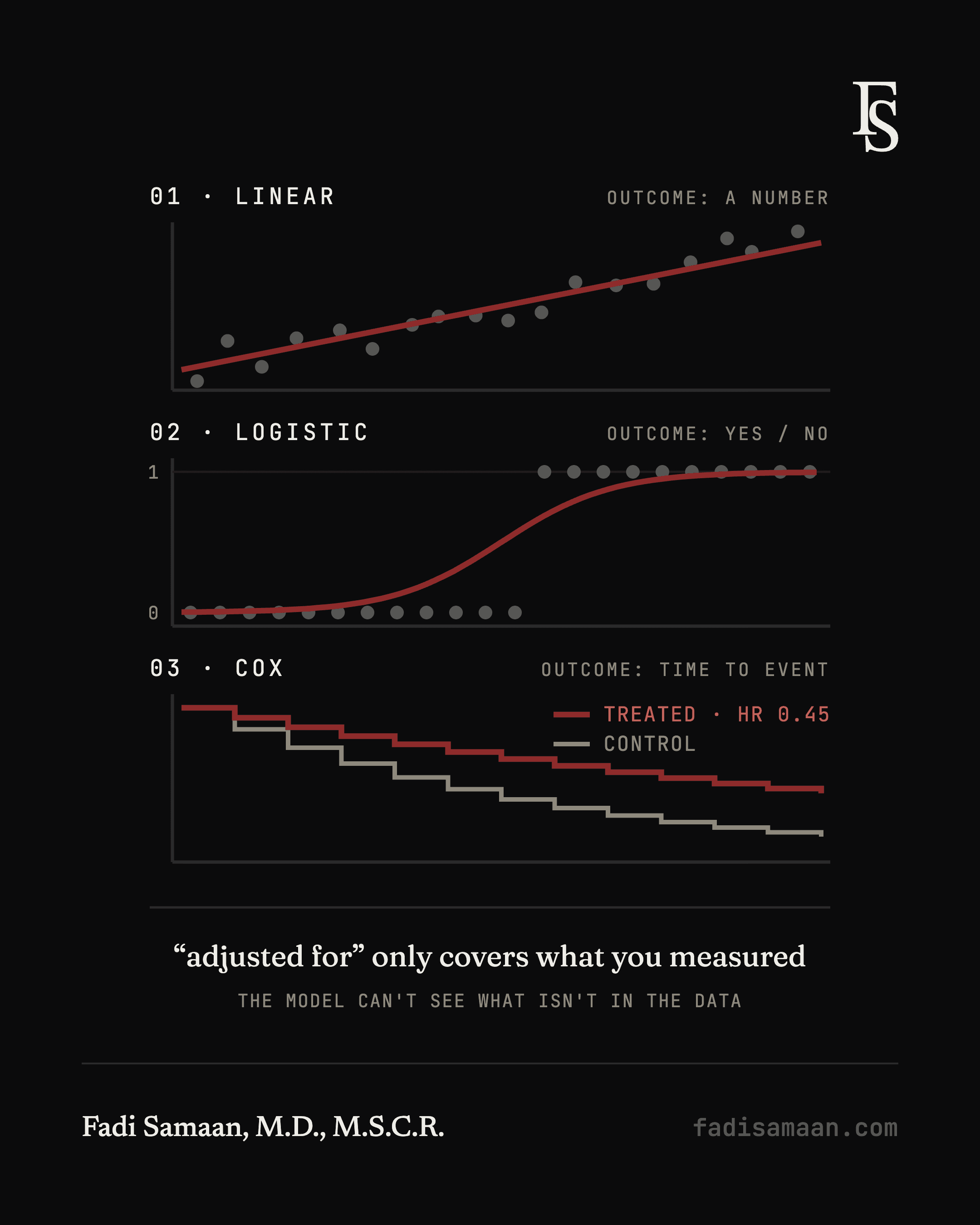
Linear, Logistic, and Cox Regression
What Adjusted For Really Means, and Where Regression Goes Wrong

Meta-Analysis and Forest Plots
How Many Studies Become One Estimate
Biostatistics
Blog
Statistics in Medicine: An Essential Tool
Why Every Doctor Needs to Understand Data
Making Sense of Medical Data
Descriptive vs. Inferential Statistics and Why They Matter
Averages and Spread in Data
Understanding What Medical Data Is Telling You
Understanding the Bell Curve
Why Symmetry Matters in Medical Data
What a P-Value Actually Means
The Most Misunderstood Number in Medical Research
What Does a 95% Confidence Interval Really Mean?
Why a Range Tells You More Than a Single Number
How Many Patients Do You Actually Need?
A Plain-Language Guide to Statistical Power
Why a Well-Powered Study Can Still Be Wrong
An Introduction to Bias in Research Design
How Researchers Try to Outsmart Confounding
Randomization, Adjustment, and the Trap of Simpson’s Paradox
Sensitivity and Specificity: The Two Numbers Behind Every Test
Cutoffs, Prevalence, and What a Result Actually Tells You
Reading an ROC Curve
The Curve, AUC, and Their Limits
Likelihood Ratios: What Actually Changes Your Mind
Turning a Result Into an Updated Probability
Relative Risk vs. Odds Ratio
Rare Diseases, Case-Control Studies, and Misleading Headlines
Number Needed to Treat and Number Needed to Harm
Baseline Risk, Outcome Choice, and Benefit Versus Harm
Linear, Logistic, and Cox Regression
What Adjusted For Really Means, and Where Regression Goes Wrong